
Script Analysis based on a worksheet
Communication, and Style by Francis Hodge
Godspell (2012 Revised Version)
I.Given Circumstances
A. Environmental facts
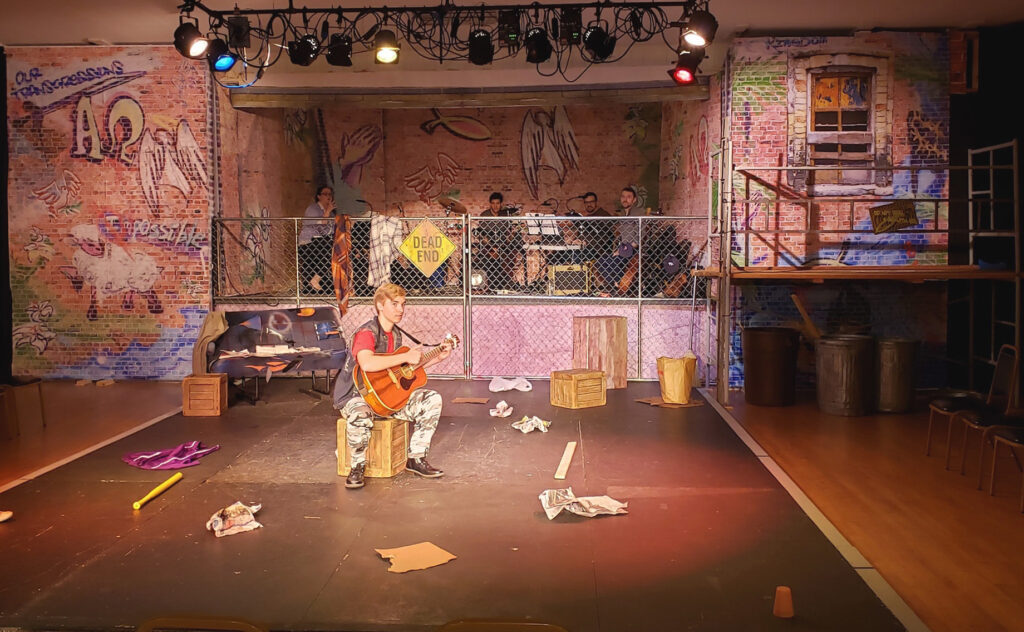
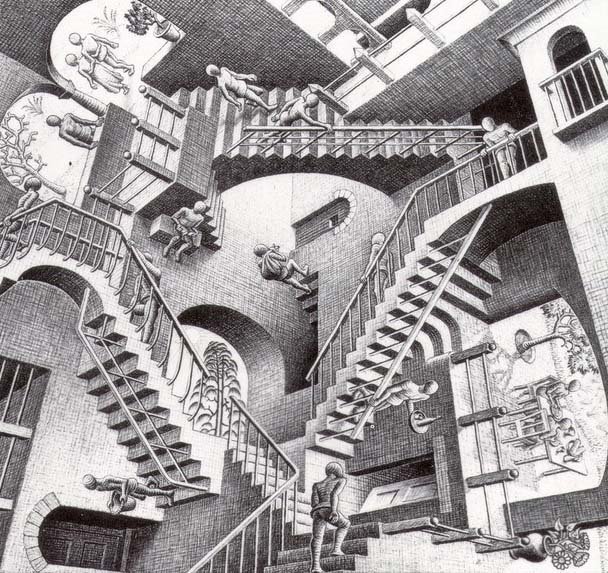
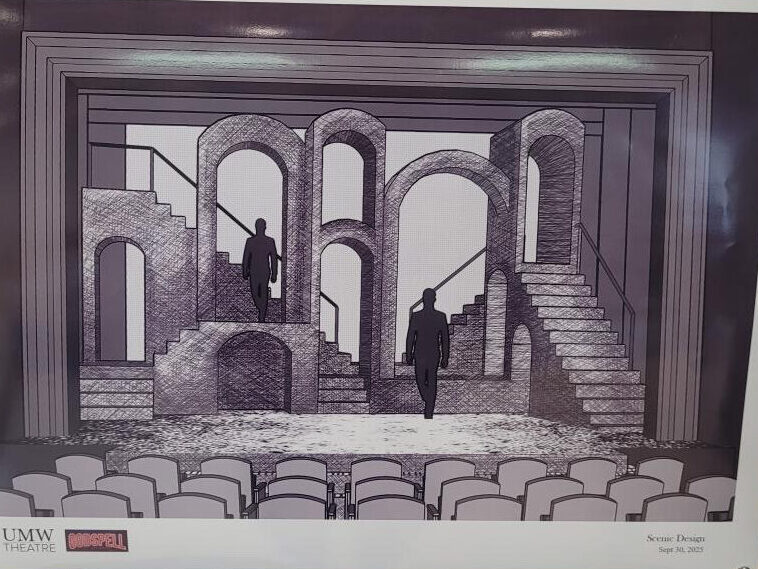
1. Place: Godspell is a very free-form play. It has no fixed location for the actors, so you have the opportunity to place it wherever you want. In the original production, which author John-Michael Tebelak wrote and directed, it was set in an urban but dusty city. The book states, “a brick wall at the back and a high chain-link fence that enclosed the action and suggested an abandoned inner-city playground.” Much of the set looked unfinished because the goal was to convey a sense of poverty rather than a polished, clean aesthetic. At the University of Mary Washington, the director has decided to set the location on various arches and stairs that lead to no-where. The idea of this set was based upon the “Infinity Stairs” meaning “stairs ways that never ends.” By the power of sight lines, the design team was able to capture that illusion. Originally heard from a little birdie, we were going to have the set take place in a coffee shop which would have been very interesting.
2. Time
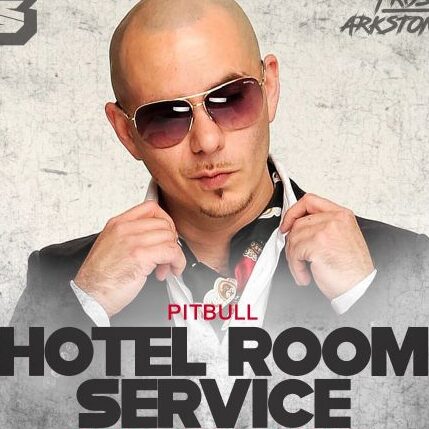
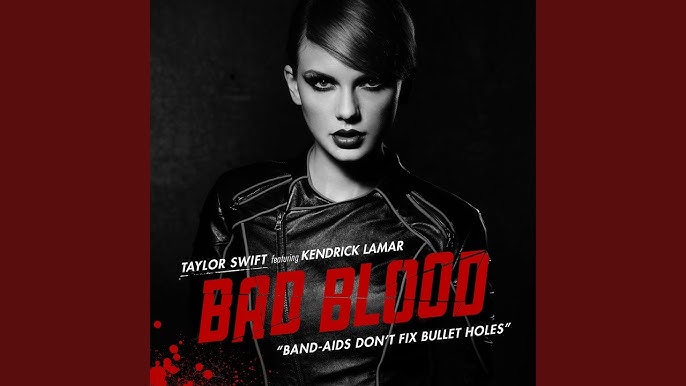
i. Date: No specific date is stated, but it is reasonable to assume the date to be modern times (2025). There are lots of up-to-date references in the show like Amber Heard, Hotel Motel, Taylor Swift, and so on.
ii. Amount of dramatic time elapsed between scenes and acts; total amount of dramatic time elapsed during the play: The show is structured as a series of parables, songs, and teachings rather than traditional “scenes,” and it unfolds in real time with almost no temporal gaps. There are also no significant jumps in time. The transitions flow from one parable or musical number into the next while the actors remain onstage for most of the show. Godspell is structured in two parts with an intermission added for production purposes, but the story picks up immediately where it left off. This story was made to be taught/take place over the course of one day.
iii. Written in 1970
iiii. Published in 1970 at the La MaMa Experimental Theatre Club in New York, made its way to Broadway in 1970, and now there’s been plenty of revivals of Godspell including the 2012 one and the 2025 production here at Mary Washington.
3. Economic environment
i. Large-scale financial systems: The environment resembles a temporary community formed by the followers of Jesus. The community survives on collaboration, improvisation, and resources, rather than the financial system. It allows the parables to function universally, without tying them to a specific economic class or historical economy. Everyone in the show comes from a different background, hints why we aren’t wearing the same clothes. Some people wore expensive dresses, hippy-styled shirts, everyday jeans, converse shoes, name brand handbags, etc.
ii. Small-scale transactions between characters: “Money” was a word referenced in the parables (ex: the story of the rich man, the Good Samaritan, or the unforgiving servant), the emphasis is on moral economics rather than actual finances. Within the community onstage, characters treat resources as communal property by creating a world where transactions serve to strengthen bonds rather than acquire goods. Many of those transactions include taking turns acting out or telling a parable, comforting one another when Jesus gets crucified, sharing props (“what if you’re bringing a gift to the altar”), and so on.
4. Political environment: The political environment for this show was situated within a contemporary American cultural landscape so political influence was less through governmental structures and more through media, celebrity celebrities, and corporate messaging. The incorporation of references to Taylor Swift, Amber Heard, Pitbull’s “Hotel Motel,” Liberty Mutual advertising, Doordashes/GrubHubs, and Family Feud positions the world of the play within a society where public discourse is shaped by digital media norms.
5. Social environment
i. Family groups: There are no family groups unless you would count the Family Feud game families and the parables in which we acted out the brothers or fathers. As a group, we pretty much form a “chosen family” within our community; Jesus being the center of it all when he grants us bracelets.
ii. Friend groups: We are all friends/family who come together to learn about the teachings of the Bible and Jesus through parables and pop culture references. Our friendships deepen as we transition from the fun bits into the more serious communal moments.
iii. Romantic relationships: There are no romantic relationships in Godspell. There are uses of noncommittal love, but only to support the parables and teachings. Emotional intimacy lives through the entirety of the cast rather than a pair so for example, the altar pranks on Regan and we as a team express emotions to make him feel better.
iv. Rivalries: Rivalries are short and playful for the show like my prodigal son parable. The brothers had blood against one another and made up by the end of the story. Jesus and Judas are the only two who are true rivals in this story. Judas escalates his relationship between himself and Jesus by betrayal, serving as the emotional climax of the narrative; breaking the limits of community trust.
v. Occupational groups: None of the characters assigned jobs or careers; they function as a jobless collective representing everyday people. The references to corporations like Liberty Mutual are jokes, not actual occupations. We do have jobs outside of the play, but they do not show up in the production.
vi. Status groups:
- Jesus holds symbolic spiritual authority, but not social superiority.
- Characters frequently swap roles, solos, and comedic moments, reinforcing equal status.
- Modern celebrity references highlight how status exists outside our group but does not infiltrate our community.
vii. Formal organizations: The characters form an informal and self-governing community. We also model organizational structures through the teachings and games, but there are no formal organizations like work, school, etc.
6. Intellect, education, and culture
iv. The depiction of art and artists:
- Characters as Artists: The cast itself embodies artists by using our bodies, voices, and improvisational skills to create a participatory theater experience.
- Theatricality as Art: The production celebrates theatre as communal art. The parables are performed with physicality, humor, and contemporary references (Taylor Swift, Amber Heard, Pitbull, Liberty Mutual). Those were carefully selected to show that art can be dynamic, culturally responsive, and accessible.
- Audience as Participants: Godspell emphasizes interactive and inclusive art. We break the fourth wall and make the audience part of the creative process. Our fourth wall moments were bringing up a Lazarus to participate in a comedic bit, doordashes, yelling family feud to the crowd, dancing in aisles, etc.
7. Religious environment: Godspell is based on the teachings of Jesus as presented in the Gospel of Matthew. The play’s religious environment is Christian in origin, emphasizing community, compassion, and moral guidance over formal doctrine. Jesus becomes the main religious figure as he embodies moral and spiritual authority rather than political or social power. His teachings show up throughout the ensemble’s community. Rather than traditional church services or rituals, this production frames religion through collective action, song and storytelling. Many of the cast’s interactions reflected a shared faith in action. We’ve had a few people walk out of the show because they came to the show expecting something completely different. Based upon many interactions I’ve had with patrons, students, family, and much more, they often took it as a clown show which is what it is. Some of the transitions from one song or parable to the next becomes extended or gets a little funky in the mix and that leaves some people confused. One person even said that they felt as if “the show was trying to convert me into a religion I do not support” and that really stuck out to me. As a cast member, we were taught in rehearsal that everyone will not understand what’s going on onstage and that’s okay. What matters is that we as a group understand the stories we are telling. The crowd will be filled with various age groups, religious backgrounds, social classes, accessibility’s needs, and beliefs. At the end of the day, we are up there to look like we are having fun telling the teachings of this production even if we don’t agree with each teaching. One of the parables will relate to someone.
B. Previous Action
1. List incidents that happened prior to the start of the play:
- Before the events of the play, John the Baptist preached and prepared the way for Jesus, who had already begun his ministry. He performed acts of kindness by sharing his blessings and baptizing us with water for repentance sake.
2. If applicable, describe previous action implied by the text but not explicitly stated:
- Disciples/casts brought forth personal histories and experiences that made us receptive to Jesus’s teachings. We were aware of societal challenges, but also exist in a culturally noisy and media-saturated world. Our production of Godspell reflected this through contemporary pop-culture references that shaped our interactions and responses.
II. Dialogue
A. Choice of words—everyday or formal? long or short?
- Words are generally short and simple, allowing ideas and parables to be understood quickly.
- Lots of Jesus’s choice of words were long and thought out.
- We also had a lot of freedom to say what we wanted to in our reaction bits to parables just as long as we kept it within the world of the play. Of course no vulgar language for the religious aspect of the environment, but everyday language like “take a chill pill”, “hold your horses”, or “yas girl!”
B. Choice of phrases and sentence structure:
- Sentences often shift between short, punchy statements and slightly longer, storytelling passages, especially during parables.
C. Choice of images—does the character use images that evoke emotion? Visuals?
- Characters created emotional and sometimes humorous images to illustrate spiritual or ethical lessons. The parables themselves are visual metaphors that evoke emotion and humor. Speaking from personal experience, my embodiment of the prodigal son. I had to make sure that my physicality matched the quality of the voice and the vision Rob had for the son in the parable. Regan and Jonah had to incorporate the same thing. That evoked much humorous emotion on our parts and from an audience point of view. There was also the Pharisees of Oz moment where Rob, Sarah, and Rachel had to use the image of the actual Wizard of Oz moments.
D. Choice of peculiar characteristics—dialect?
- Dialogue is generally neutral in dialect, though individual performers may add small quirks or emphases to distinguish character personalities. Any peculiarities in speech often emerge from comedic timing, exaggerated rhythm, or modern references, rather than from formal regional accents.
E. The sound of the dialogue—does the character use “hard” sounding words or “soft” sounding?
- The dialogue has soft lyrical phrasing in parables
- Songs have hard, percussive, or staccato sounds (including the Hamilton Beat Box/Stomping Bit)
- Jokes, exclamations, call-and-response moments, etc.
F. Structure of lines and speeches—how does it support the delivery of the subtext?
- Lines are rhythmic, musical, or story-driven structure reinforcing the subtext of community.
- Short lines allow for timed reactions and audience connection.
- Long storytelling passages give space for moral lessons to resonate.
III. Dramatic Action
Break down the play into workable units of action. Sometimes you can find a break where an entrance or exit occurs, while at other times it is a change in subject. A one-act play typically has between 6-15 units, but not always.
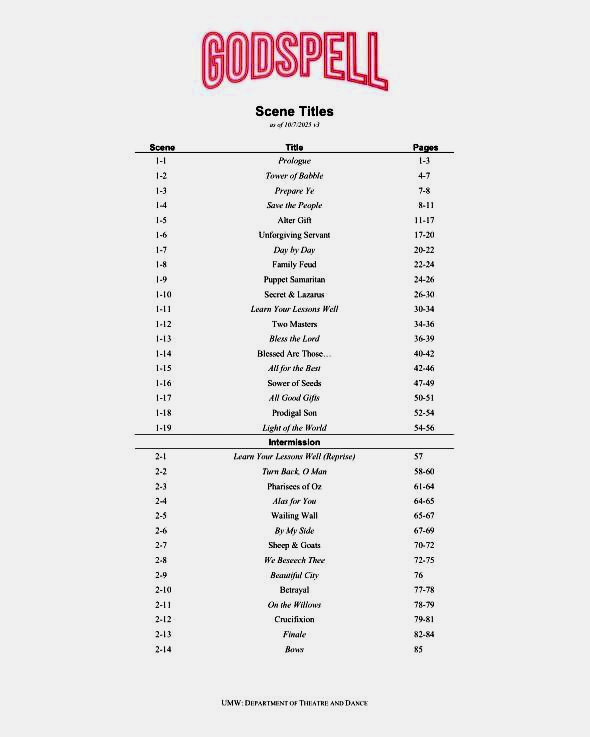
A. Title the units—number the units in the scene or play and give a nominative phrase as a title for each unit: Gregg has been very helpful in providing his very own nominative phrases as a title for each unit in the show as seen in the picture below.
IV. Character
Character: Originally Celisse from the Broadway 2012 revival, but Giannii/myself in the 2025 version.
Desire: To be part of a community to tell the stories of parables. I want to contribute and feel included amongst the group. I want to seek joy and stand out sometimes, but not in a way that overthrows other cast members
Will: To fully engage in the physicality of not only stories, but songs and choreography. I’m also willing to support the cohesion of the cast to ensure the the spotlight does not steer from Jesus
Moral Stance: To give generosity, curiosity, openness, and creativity to make the story authentic to myself and others
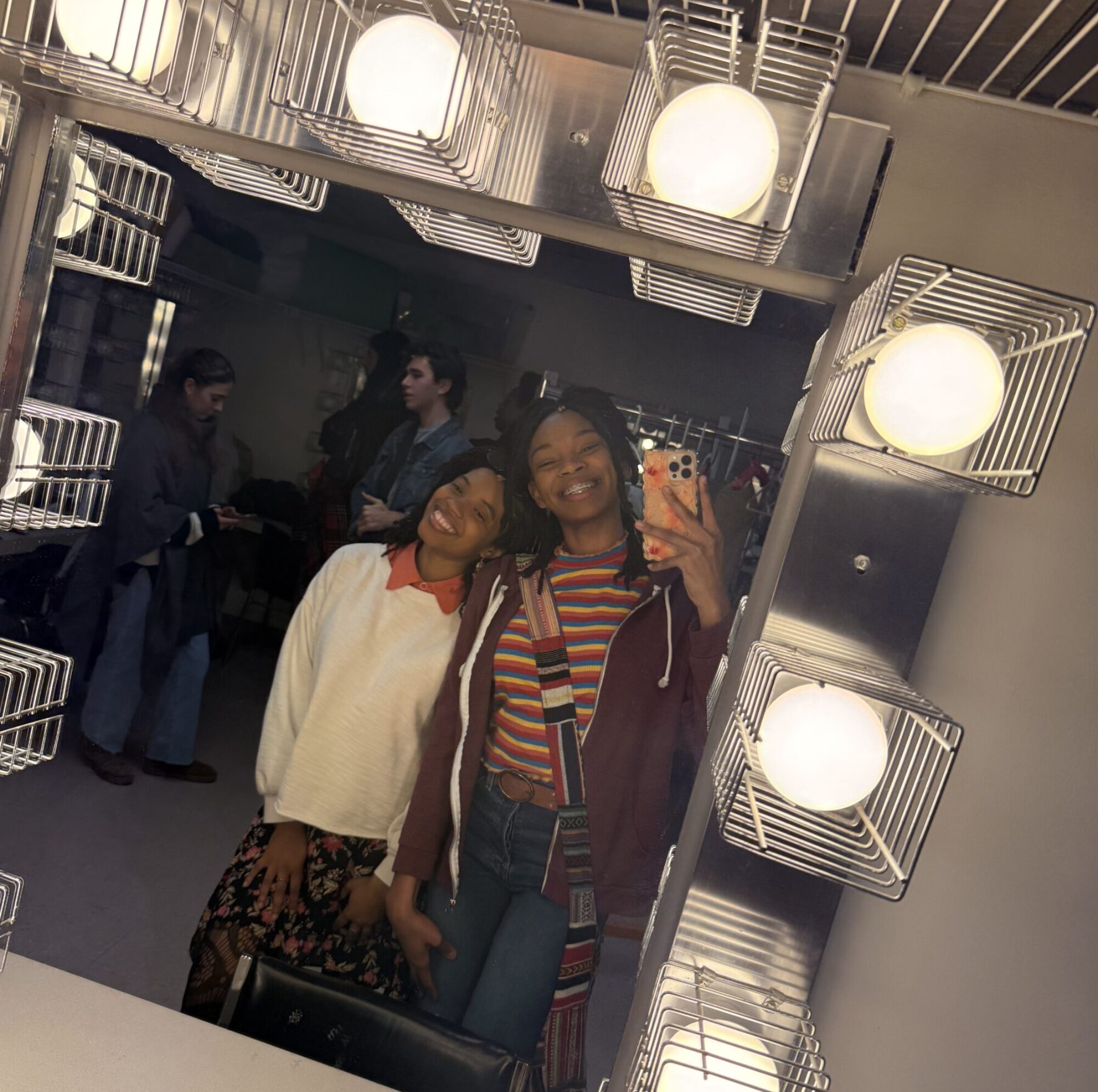
Decorum: High ponytail, burgundy jacket, multicolored striped shirt, high-rise blue jeans, RuPaul socks, bright pink athletic shoes, a multicolored hippie styled bag, a book about Hegel’s philosophy, embroidered brown belt, and a purple iPhone.



V. Ideas
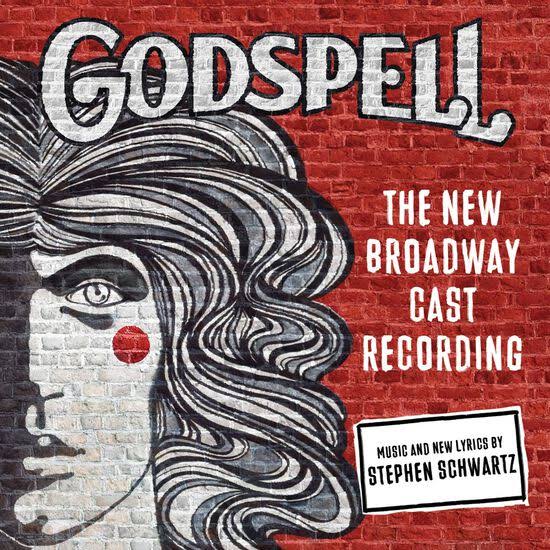
A. Meaning of the title: Godspell is derived from the word “godspel,” which literally means “good news” or “gospel.” It directly references the message of Jesus as recorded in the Christian Gospels, emphasizing teaching, moral guidance, and spiritual storytelling. In the context of the play, the title reflects the central purpose of the ensemble and Jesus. The ensemble’s goals are to share ethical lessons, inspire community, and convey spiritual truths through parables, music, and performance. There are many teachings from Matthew and Luke that Godspell pulls from as well as the music. It resonates with the way the ensemble communicates these lessons in pop-culture references and interactive storytelling to make the “good news” accessible and engaging for today’s audience.
B. Philosophical statements in the play:
- Ethnically lessons are universal and not always bible restricted
- Engagement is very well needed
C. Implications of the action:
- We live out the lessons through our stories
- Build a community with responsibility and inclusion
- Encourage the audience to reflect on their own lives
D. Consider each scene—determine the purpose of each scene in the play. What idea is it trying to convey? How does it help the overall idea?
- Parables give us teachings of love, forgiveness, learning our lessons well, etc.
- Our songs reinforce the lessons we were taught. We sing them as a group to show Jesus that we are listening to his teachings.
- Showing characters personalities through pop culture and media references.
- Tension between the betrayal of Judas and Jesus as well as the crucifixion.
- The power of Jesus’s resurrection
VI. Dramaturgical Research
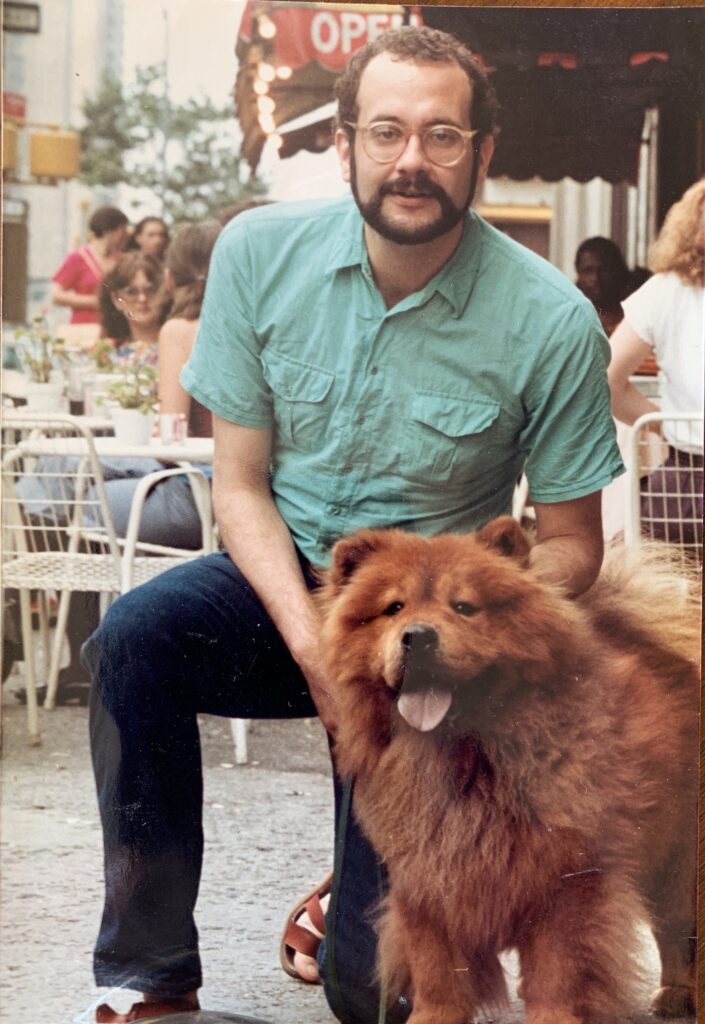
A. Author: John-Michael Tebelak (September 17, 1949–April 2, 1985) was an American playwright and director best known for creating Godspell. He was a choirboy at 9 years old and later attended Carnegie-Mellon University in Pittsburgh where he wrote Godspell. Tebelak actually became a postulant (deacon or priest) for the Episcopal Church in 1978. The Episcopal Church is a blend between Protestant and Catholic traditions. He has a limited amount of personal details about his life on the internet which say a lot about how he values privacy. Tebelak collaborated with Stephen Schwartz, (March 6, 1948) American musical composer and lyricist who wrote songs for many popular artworks like Wicked, Pippin, The Wizard of Oz, and more!
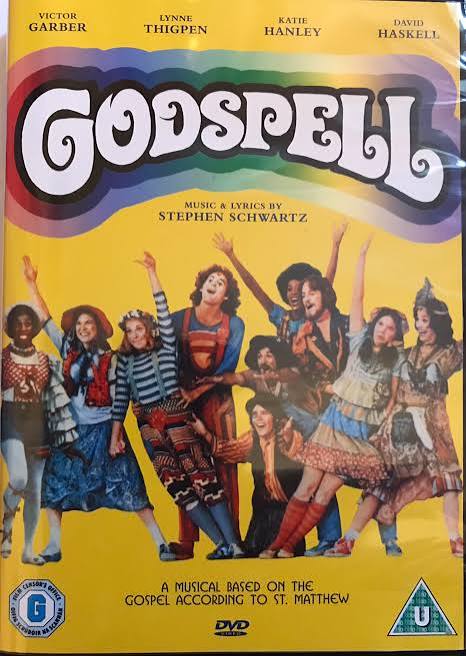
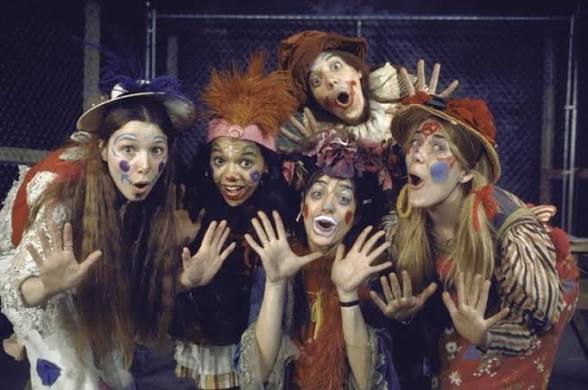
B. Play: Godspell is a musical adaptation of the Gospel of Matthew, first performed in 1971. It uses parables, songs, comedy, and physical theater to explore ethical and spiritual lessons. The 2012 Broadway revival updated the presentation while maintaining the original’s ensemble-driven, interactive style. It has been performed through many different adaptations with our 2025 revivalist being one as well as the other production of Godspell at Mary Washington in which took place at the Monroe Fountain. This show was originally written for everyone to play as clowns and Jesus gathered them as a community to paint their faces with colorful greasepaint. In our version, we incorporated bracelets instead because it got the basis of the point across. This production was turned into a movie in 1973 soon after being written by David Greene that starred Victor Garber and David Haskell as Jesus and Judas/John the Baptist.
C. Genre: Godspell is a musical theater piece with elements of comedy, morality play, and revue-style ensemble performance. It blends biblical storytelling with contemporary humor, song, and improvisation.
D. Period—social, historical, literary, artistic influences: Tebelak drew inspiration from his background in theater, education, and spiritual exploration to craft a play that combined morality, music, and ensemble storytelling. During the 1970’s era, the Vietnam War and social activism was happening which shaped the play into what it is today.
VII. Sensory Research: Pictures

VIII. Exploration of Dramatic Structure
A. Describe the stasis or balance at the play’s beginning: The play begins in a state of spiritual fragmentation with individuals isolated in their seats who are speaking conflicting philosophies and lacking unity or shared purpose. The world is noisy, chaotic, and disconnected. This is later emphasized by the usage of contemporary cultural references along with the parables being told in no particular order. You also see this with some of the more funky transitions.
B. Describe the inciting incident, or the moment at which the stasis is interrupted and sets the dramatic action in motion: The inciting incident happens when John the Baptist arrives and calls the ensemble to prepare for the coming of Jesus. He sings the song “Prepare Ye” to disrupt the chaos and begins gathering the individuals into a community. In other words, to focus on what’s more important.
C. Describe the central dramatic action, which begins at the inciting incident and is typically resolved through the climax: The action follows Jesus building a cohesive community by teaching his followers through parables, music, and shared play. Each parable strengthens relationships so that everyone gains a deep understanding of what comes next.
D. Describe the climax, when the central problem is faced and resolved by the main character(s): Occurs with Judas’s betrayal and the crucifixion of Jesus. We are all in an arch that mimics the arch ways of the set and Jesus says that one of us will betray him. I am the very first one who asks and then it becomes a rippling effect until it lands on Judas. Judas challenges the community by seeing if they can uphold and embody Jesus’s teachings when confronted with weakness.
E. Describe the new stasis established at the play’s conclusion: A new stasis emerges as the ensemble carries Jesus’s message forward which was represented by lifting him up to walking off stage together while continuing in unified song. This ending restores balance but transforms the community into one that is spiritually awakened.
F. Describe the point of attack (usually characterized as “early” or “late”): The point of attack happens early in the show before the teachings have started;specifically the Prologue and Tower of Babble which allowing the audience room to witness the group’s development throughout the later parables and musical numbers.